
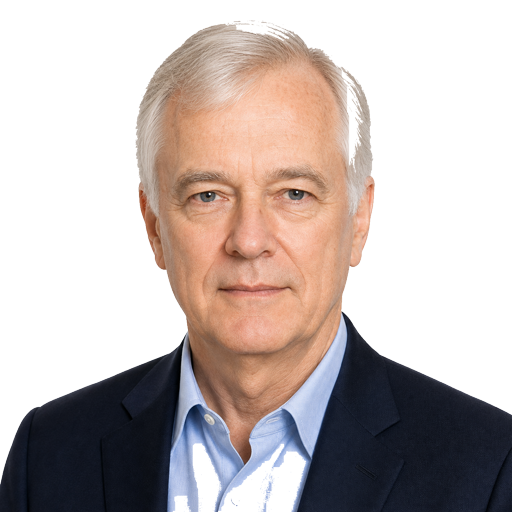
Robert Engle
Developed ARCH model (1982) and GARCH extension; Nobel Prize 2003; ARCH/GARCH family standard in financial time series analysis; V-Lab (volatility laboratory) provides real-time volatility estimates globally; co-founded V-Lab.
Robert Engle studied physics at Williams College and received his PhD in economics from Cornell University. He taught at MIT and UC San Diego before joining NYU Stern School of Business, where he is an emeritus professor. In 1982 he published what would become one of the most influential papers in financial econometrics: the ARCH (AutoRegressive Conditional Heteroskedasticity) model. The key insight is that financial asset returns do not have constant variance but instead exhibit volatility clustering — periods of high volatility tend to be followed by further high volatility, and vice versa. The ARCH model provides a way to model this time-varying conditional variance statistically. Tim Bollerslev subsequently developed the GARCH (Generalised ARCH) extension, which became the workhorse of financial time series modelling. ARCH/GARCH models and their descendants (EGARCH, GJR-GARCH, etc.) are now standard tools in every risk model at banks and investment firms globally, used for Value at Risk calculations, options pricing (stochastic volatility), and portfolio risk management. Engle shared the 2003 Nobel Prize in Economics with Clive Granger for their contributions to time series analysis. He founded the V-Lab (Volatility Laboratory) at NYU, which provides free real-time volatility estimates for thousands of financial instruments.

Person photos, portraits, descriptions, and market context may be AI-generated or AI-assisted and are not an official biography, identity verification, affiliation, or endorsement: legal notice.
Analytics
Instrument Influence
Loading influence...
Signal Sources
Loading sources...
Checking access...