
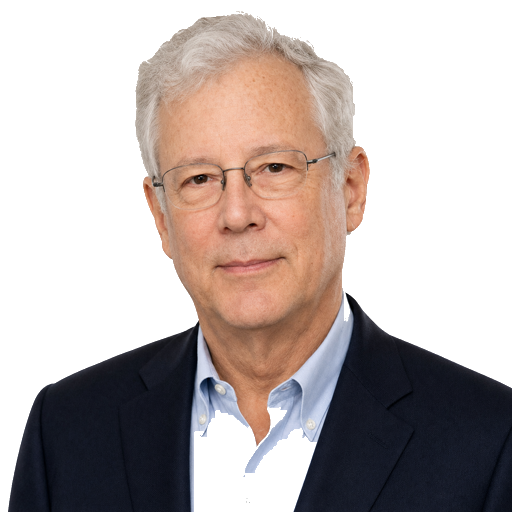
Richard Thaler
Developed mental accounting theory; documented the disposition effect in investing; co-wrote Nudge (2008); Nobel Prize 2017; research on 401(k) plan design increased US retirement savings.
Richard Thaler received his PhD in economics from the University of Rochester and has been a professor at Chicago Booth since 1995. He is one of the founders of behavioural economics — the field that combines psychological insights with economic analysis to understand how people actually make decisions. His early work documented mental accounting — the tendency of people to treat money differently based on its source and intended use, contrary to economic theory's prediction that money is fungible. He documented the endowment effect — the tendency of people to value things they own more than equivalent items they do not own — providing experimental evidence for loss aversion in real-world settings. In collaboration with Werner De Bondt, he documented the overreaction hypothesis — that stock markets systematically overreact to news, causing past losers to outperform past winners — one of the earliest systematic demonstrations of exploitable anomalies in the stock market. Together with Shlomo Benartzi he developed the Save More Tomorrow programme (SMarT), which uses behavioural nudges to increase retirement saving by automatically escalating contribution rates — work that has measurably increased retirement savings for millions of Americans and influenced pension policy globally. His book "Nudge" (2008) with Cass Sunstein became a global bestseller and influenced public policy in multiple countries. Thaler received the Nobel Prize in Economic Sciences in 2017.

Person photos, portraits, descriptions, and market context may be AI-generated or AI-assisted and are not an official biography, identity verification, affiliation, or endorsement: legal notice.
Analytics
Instrument Influence
Loading influence...
Signal Sources
Loading sources...
Checking access...