
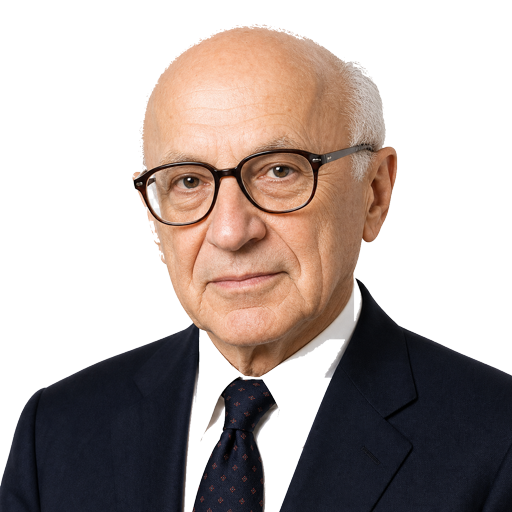
Milton Friedman
Monetarism, free market economics, Great Depression causation, central bank independence
Milton Friedman received the Nobel Prize in Economics in 1976 for his work on consumption analysis and monetary history. His book "A Monetary History of the United States, 1867-1960" (with Anna Schwartz) argued that the Great Depression was caused by Federal Reserve policy failures — a claim that transformed understanding of the Fed's role. His monetarist framework — arguing that inflation is always and everywhere a monetary phenomenon — influenced central banks globally. "Free to Choose" (1980) popularized free market economics for general audiences. Friedman was an adviser to Thatcher and Reagan. His permanent income hypothesis — which holds that consumption is determined by long-run expected income rather than current income — transformed macroeconomic thinking about fiscal multipliers and the effectiveness of temporary income transfers as economic stimulus, with ongoing relevance to debates about the impact of tax policy and government transfer programs on aggregate demand.

Person photos, portraits, descriptions, and market context may be AI-generated or AI-assisted and are not an official biography, identity verification, affiliation, or endorsement: legal notice.
Analytics
Instrument Influence
Loading influence...
Signal Sources
Loading sources...
Checking access...