
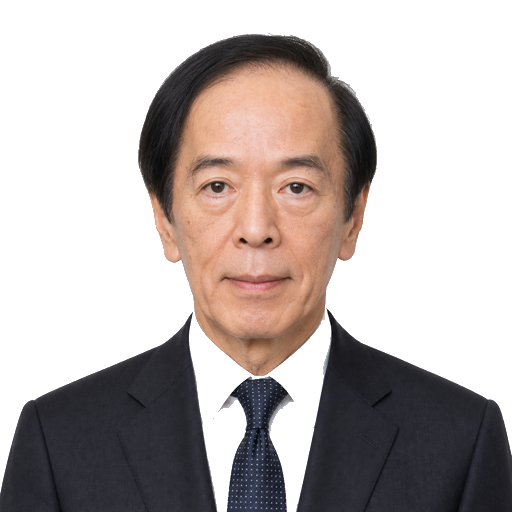
Kazuo Ueda
First academic to lead the Bank of Japan, ending the world's longest experiment with negative interest rates and yield curve control
He is the first academic — rather than a career central banker or finance ministry official — to lead the BOJ, a choice that signalled Japan's desire for a fresh analytical perspective on monetary policy. Ueda inherited the most aggressive monetary experiment in modern history: over 30 years of near-zero or negative interest rates, massive asset purchases, and yield curve control (YCC) that effectively capped the 10-year Japanese government bond yield. His central challenge has been engineering an orderly exit from these extraordinary measures without triggering a disorderly spike in JGB yields, a destabilizing yen rally, or a domestic recession. Under Ueda, the BOJ began loosening yield curve control in late 2023 and formally ended negative interest rates in March 2024 — the first rate hike since 2007. Each step has been meticulously communicated to avoid market shock. The global significance is immense: Japanese institutional investors are among the world's largest holders of foreign bonds, and any meaningful rise in domestic yields can repatriate capital, pushing up borrowing costs worldwide. Ueda's policy decisions directly affect the yen carry trade — a pillar of global FX positioning — and set the trajectory for JGB yields, the BOJ policy rate, and Japan's inflation outlook.

Japan's exit from decades of zero rates — BOJ normalization reshaping global carry trade dynamics.

Japan's inflation awakening after 30 years of deflation — reshaping BOJ policy and yen dynamics.

BOJ yield curve control anchor — the rate that defines Japan's monetary experiment and global carry trade.
Person photos, portraits, descriptions, and market context may be AI-generated or AI-assisted and are not an official biography, identity verification, affiliation, or endorsement: legal notice.
Analytics
Instrument Influence
Loading influence...
Signal Sources
Loading sources...
Checking access...