
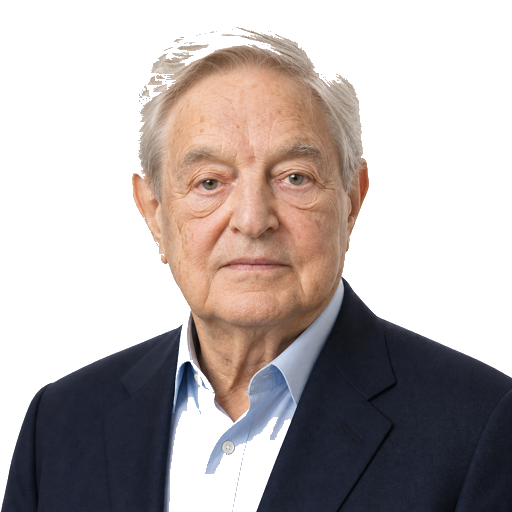
George Soros
Quantum Fund returned 4,200% with Jim Rogers (1970-1980); broke Bank of England (1992) earning $1B; theory of reflexivity in markets; donated $32B+ to Open Society Foundations.
George Soros was born in Budapest, survived the Nazi occupation of Hungary, and emigrated to England where he studied philosophy at the London School of Economics under Karl Popper — whose philosophy of falsifiability deeply influenced Soros's thinking about financial markets. He moved to the United States and worked at various investment banks before founding Soros Fund Management. Together with Jim Rogers he managed the Quantum Fund, generating approximately 4,200% returns from 1970 to 1980. His most famous trade came in September 1992 when he identified that the British pound was overvalued within the European Exchange Rate Mechanism — which required the Bank of England to maintain the pound above a certain floor against the German Deutsche Mark. Soros's fund built a short position exceeding £10 billion in sterling, anticipating that economic pressures would force the UK to devalue or exit the ERM. When the Bank of England's defence failed — having spent approximately £27 billion of reserves — the UK was forced to withdraw from the ERM on "Black Wednesday," September 16, 1992. Soros's fund reportedly made approximately $1 billion in a single day. He has since converted Soros Fund Management into a family office. Soros is also one of the world's most prominent philanthropists through the Open Society Foundations, which has distributed over $32 billion across democracy, human rights, and educational causes globally.


Person photos, portraits, descriptions, and market context may be AI-generated or AI-assisted and are not an official biography, identity verification, affiliation, or endorsement: legal notice.
Analytics
Instrument Influence
Loading influence...
Signal Sources
Loading sources...
Checking access...