
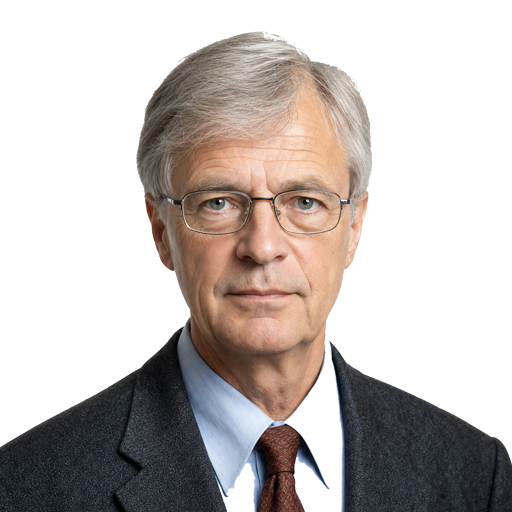
Finn Kydland
Real business cycle theory, time inconsistency, central bank rules, macroeconomic methodology
Finn Kydland and Edward Prescott received the 2004 Nobel Prize in Economics for contributions to dynamic macroeconomics. Their paper on "time inconsistency" showed why monetary policy authorities, even if well-intentioned, would create higher inflation than optimal if given discretion — making rules-based policy superior. Their real business cycle (RBC) model argued that fluctuations in economic output can be explained by real factors like technology shocks rather than demand fluctuations. This framework became the foundation for modern Dynamic Stochastic General Equilibrium (DSGE) models. Prescott's work at the Federal Reserve Bank of Minneapolis further influenced how the Fed staff approached macroeconomic modeling, while Kydland contributed to understanding international business cycle synchronization and the role of capital accumulation in driving economic fluctuations.

Person photos, portraits, descriptions, and market context may be AI-generated or AI-assisted and are not an official biography, identity verification, affiliation, or endorsement: legal notice.
Analytics
Instrument Influence
Loading influence...
Signal Sources
Loading sources...
Checking access...