
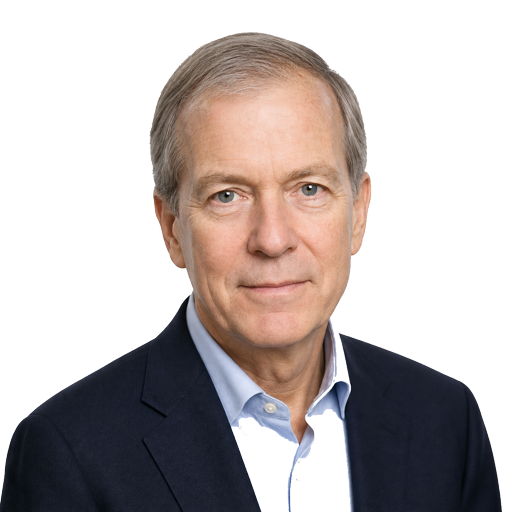
David Swensen
Grew Yale Endowment from $1B (1985) to $42B (2021); pioneered heavy alternatives allocation (PE, venture, real assets, hedge funds); 35+ years of ~13% annualised returns; wrote Pioneering Portfolio Management (2000).
David Swensen received his PhD in economics from Yale University, where he wrote his dissertation under Nobel laureate James Tobin. He spent three years on Wall Street at Lehman Brothers and Salomon Brothers before returning to Yale in 1985 as Chief Investment Officer of the Yale Endowment at age 31. At the time the endowment had about $1 billion in assets and was invested conventionally in domestic stocks and bonds. Over the next 36 years Swensen transformed it into one of the highest-performing investment funds of any type in the world. His innovation was the "Yale Model" or "endowment model": dramatically increasing allocations to illiquid alternative assets — private equity, venture capital, real estate, timber, oil and gas, and hedge funds — while reducing conventional stock and bond holdings. The logic was that endowments with long time horizons could accept illiquidity premiums unavailable to shorter-horizon investors, and that the higher complexity and costs of alternatives were justified by their diversification benefits and excess returns. Under Swensen's management the Yale Endowment generated approximately 13% annualised returns from 1985 to 2021, growing from $1 billion to $42 billion. This performance has been one of the most influential demonstrations in institutional investing history. Swensen wrote "Pioneering Portfolio Management" (2000) and "Unconventional Success" (2005), which detailed his investment philosophy. His model has been widely adopted by university endowments, pension funds, and sovereign wealth funds globally. He passed away in May 2021.

Person photos, portraits, descriptions, and market context may be AI-generated or AI-assisted and are not an official biography, identity verification, affiliation, or endorsement: legal notice.
Analytics
Instrument Influence
Loading influence...
Signal Sources
Loading sources...
Checking access...