
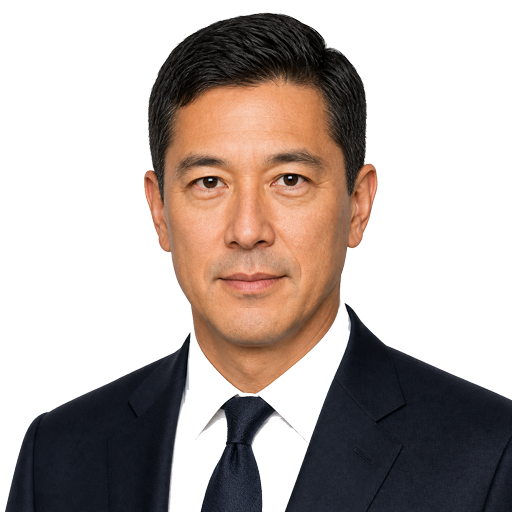
Brad Katsuyama
Discovered latency arbitrage at RBC Capital Markets; co-founded IEX in 2013 with a "speed bump" slowing HFT advantages; IEX approved as full exchange in 2016; Flash Boys (2014) sparked HFT regulatory debate.
Brad Katsuyama worked as a trader at Royal Bank of Canada's capital markets division in New York and became increasingly frustrated that his large equity orders were being front-run by high-frequency traders who could detect his order flow and react faster than he could execute. After extensive investigation with his team, he traced the problem to latency arbitrage — the ability of HFT firms co-located at exchanges to receive and act on information microseconds before slower market participants. In 2013 he co-founded IEX Group with the mission of creating a fairer exchange that would eliminate the structural advantages enjoyed by HFT firms. IEX's key innovation was a "speed bump" — a 350-microsecond delay imposed on all incoming orders by routing them through a 38-mile coil of fiber optic cable. This delay made it impossible for co-located HFT firms to exploit their latency advantage. IEX was approved as a full national securities exchange by the SEC in 2016 after overcoming fierce opposition from incumbent exchanges and HFT firms. Michael Lewis featured Katsuyama's story prominently in "Flash Boys" (2014), bringing the HFT debate to a mass audience. IEX has grown to become a significant trading venue, though its market share has been constrained by competitive pressures.


Person photos, portraits, descriptions, and market context may be AI-generated or AI-assisted and are not an official biography, identity verification, affiliation, or endorsement: legal notice.
Analytics
Instrument Influence
Loading influence...
Signal Sources
Loading sources...
Checking access...