
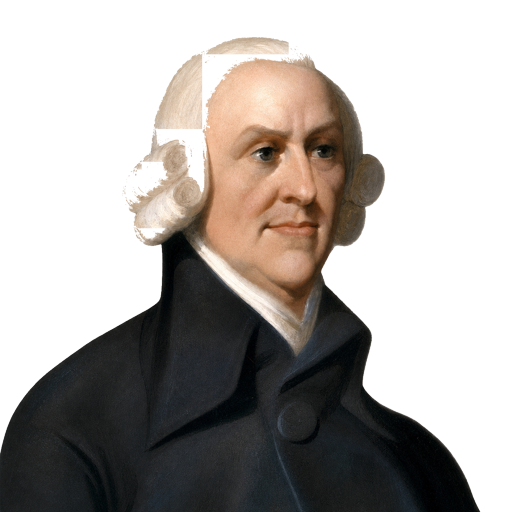
Adam Smith
Market economics foundations, division of labor, free trade theory, invisible hand
Adam Smith published "An Inquiry into the Nature and Causes of the Wealth of Nations" in 1776, the foundational text of modern economics. He articulated how market prices emerge from individual self-interest (the "invisible hand"), how the division of labor drives productivity and economic growth, and why free trade benefits all nations. Smith also wrote "The Theory of Moral Sentiments" examining the social and ethical foundations of economic behavior. His work established economics as a discipline and continues to inform economic policy, market design, and political philosophy centuries later. The concept of comparative advantage, later formalized by David Ricardo, owes an intellectual debt to Smith's analysis of specialization and exchange. Modern debates about market failures, externalities, and the proper role of government intervention in markets are conducted in the language and conceptual framework he established in the eighteenth century.

Person photos, portraits, descriptions, and market context may be AI-generated or AI-assisted and are not an official biography, identity verification, affiliation, or endorsement: legal notice.
Analytics
Instrument Influence
Loading influence...
Signal Sources
Loading sources...
Checking access...